
Commercial Kitchen Plumbing: Common Questions
How is my grease interceptor sized, and can I just use a small under-sink trap?
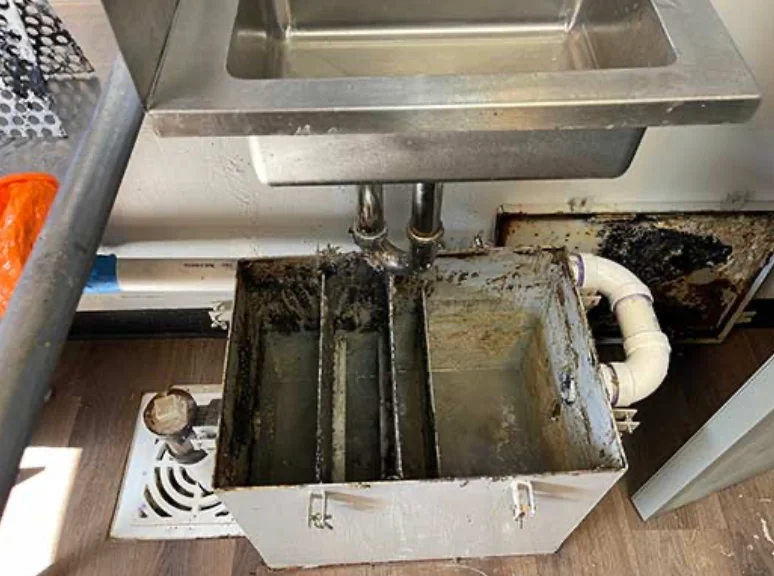
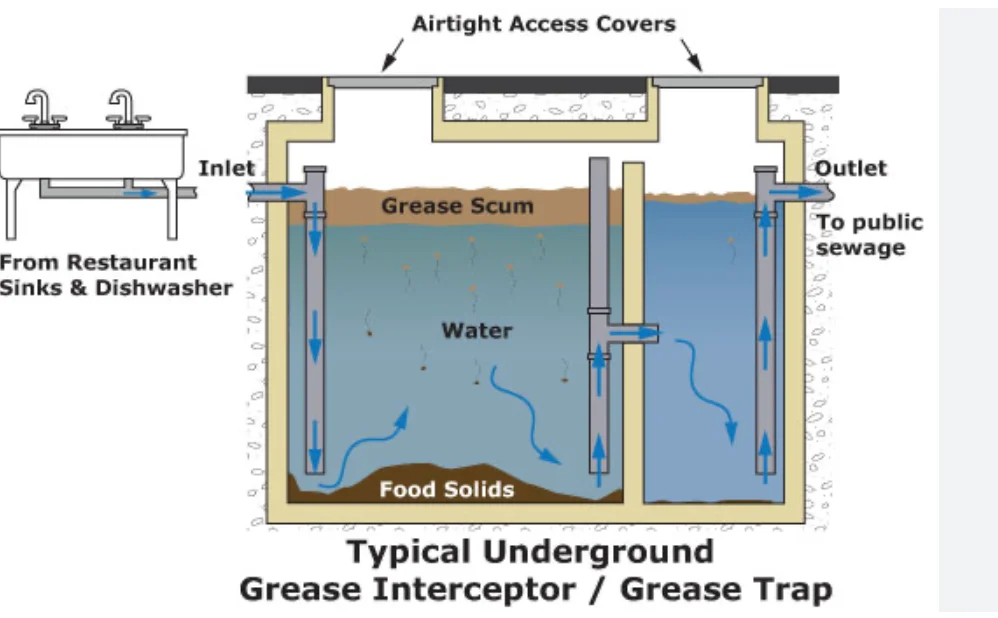
Sizing follows California Plumbing Code Table 1014.3.6, which ties interceptor volume to the drainage fixture units connected to it. Los Angeles County Public Works generally requires a minimum 750-gallon gravity interceptor for restaurants, with 1,500 gallons the usual ceiling unless the Environmental Programs Division approves otherwise. A small hydromechanical under-sink unit is accepted only for limited fixture counts, not for a full production kitchen.
How often does the interceptor have to be pumped, and what do I keep on file?
Pump before accumulated grease and solids reach roughly a quarter of the liquid depth, which puts most full-service kitchens on a 30 to 90 day cycle. Use a permitted hauler and keep the signed manifest for every pump-out on site. An inspector from the LA Sanitation industrial waste program or LA County Public Works asks for that log during a routine visit, not after a spill.
Can I run a garbage disposal into the grease interceptor?
Not without written approval. LA County Public Works pretreatment guidelines state that no food waste grinder shall be connected to or discharge into a grease interceptor unless the Environmental Programs Division specifically permits it. Ground food solids fill the interceptor quickly and push grease past the baffles into your lateral. Most kitchens use basket strainers and scrape plate waste into a solids bin instead.
My health inspection got marked down for something plumbing-related. What are they looking at?
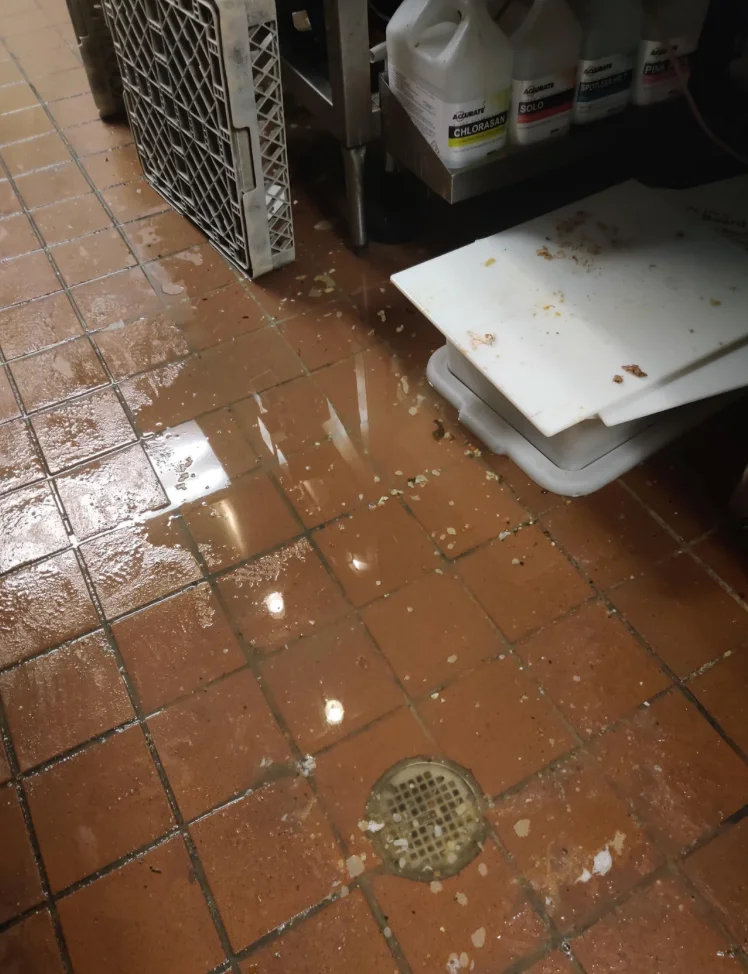
LA County Department of Public Health inspects against the California Retail Food Code. Section 114193 requires an adequate, protected supply of hot and cold water at required fixtures. Common findings are a backed-up floor sink, a missing air gap on a dishwasher or ice machine drain, a handwash sink without hot water, and standing water at a floor drain. Sewage backup is an imminent health hazard and can close a facility.
Can you do the work at night or between services?
Yes, and for interceptor work or line replacement that is usually the only workable window. We schedule around your covers, shut down only the affected fixtures where the piping allows, and stage material before the kitchen closes. Where the job needs an LADBS inspection, that inspection happens during department hours, so the open-trench or open-wall stage gets planned around the inspector's schedule.
What is the difference between a floor drain and a floor sink?
A floor drain removes water from the floor. A floor sink is a receptor set flush in the floor that receives indirect waste from a dishwasher, ice machine, steam table, or prep sink through an air gap above its flood rim, so sewage cannot back up into food equipment. Health inspectors check that the air gap exists and the receptor is clean and draining. They are not interchangeable.
Why does my restaurant line clog differently from a house?
Volume and temperature. Hot dishwater carries grease down the line as a liquid, then it cools in the lateral and hardens on the pipe wall layer by layer. Detergent emulsifies grease past a trap so it re-forms downstream. Add food solids, paper, and a twelve to sixteen hour service day, and a 4-inch commercial lateral loads up in a month more than a house does in years.
Who tests the backflow preventer, and how often?
A tester certified under Title 17 of the California Code of Regulations, once a year. Food facilities are treated as a high-hazard connection, so the water purveyor, which is LADWP inside the City of Los Angeles, requires a reduced-pressure principle assembly on the service and an annual test report on file. Missed tests generate notices and can escalate to shutoff. Any needed repair happens before the report is submitted.
Do I need permits for kitchen plumbing changes?
For most of it, yes. LADBS issues plumbing permits for installation or modification of drainage, waste, and vent systems, which covers moving a sink, adding a floor sink, or replacing a lateral. A new or upsized grease interceptor goes through industrial waste review, and a food facility tenant improvement gets a plan check from LA County Environmental Health. The work is done under a C-36 license; ours is CSLB #914119.
What drives the cost of commercial kitchen plumbing work?
Interceptor size and where it can physically be placed, whether the slab has to be opened, how much line runs under finished floor, after-hours labor, permit and plan-check time, and whether the health department requires you to close during the work. A recurring maintenance schedule prices differently from a one-time repair. We walk the kitchen and camera the lines, then give a firm number before starting.