


Address:
5301 Beethoven St, Ste 133, Los Angeles, CA 90066

Silver Lake Plumbing FAQ
Why is my sewer line in Silver Lake so much longer than my neighbor's?
Hillside lots put the house well above the street, so the lateral runs further and often steeper from the house down to the main. A longer run means more joints, more places for roots to enter, and more pipe to inspect and repair. It also means the point of failure can be anywhere along it, which is why we camera the full length rather than guess from the symptom.
Do I need a permit for plumbing work in Silver Lake?
For most substantial work, yes. Silver Lake is City of Los Angeles, so permits and inspections go through LA Department of Building and Safety: water heater replacement, repipes, gas line work, and sewer replacement. Hillside properties can also draw additional review where excavation or retaining structures are involved. We file the application, meet the inspector, and hand you the finaled permit when it closes.
Are you licensed and insured for work in Silver Lake?
Yes. California C-36 plumbing contractor, CSLB #914119, in business since 1999, with general liability and workers' compensation coverage. On hillside work with excavation near a neighbor's slope or a retaining wall, insurance matters more than usual. LADBS inspectors check the license on permitted jobs, and you can verify the number and its status on the CSLB website before we start.
Water is pouring out under my Silver Lake house on a hillside. What now?
Shut the main at the meter, usually down at the street rather than beside the house on these lots, so allow for the walk. Turn off the water heater. On a slope, running water undermines soil fast, so try to divert it away from the downhill side and off any retaining wall. Call (310) 845-6027 and describe where the water is going.
What plumbing is typical in a 1920s Spanish house near Sunset Junction in Silver Lake?
The 1920s and 1930s Spanish and Craftsman stock around Sunset Junction was built with galvanized steel supply, cast iron drains inside the house, and a clay lateral out to the street. Galvanized closes up internally and drops pressure; cast iron scales; clay cracks as the slope shifts. Mid-century houses built into the hillsides above are usually copper supply with cast iron drains.
Can you get a truck and equipment to my house up by the Silver Lake Reservoir?
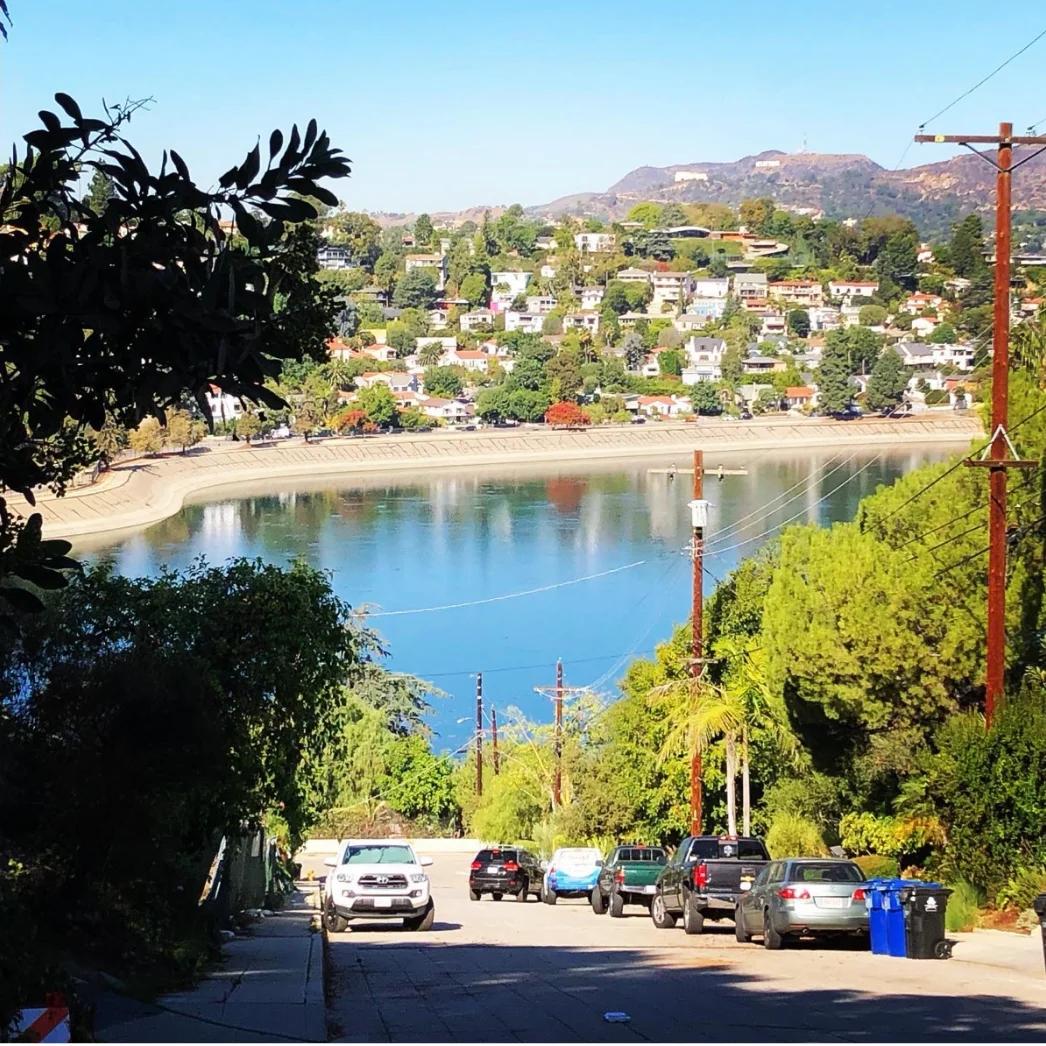
Often not right to the door. Narrow streets, stepped lots, and retaining walls around the Reservoir and Silver Lake Heights mean the truck parks on the street and equipment comes in from there. That is a real constraint, and on these lots access drives cost more than materials do. We look at the approach and the stair run before quoting anything.
My drains back up in Silver Lake every time it rains hard. Why?
Heavy rain saturates the ground around the lateral on a hillside, and water finds its way into cracked joints, adding volume the line was never sized to carry. Runoff on a slope also loads the line if downspouts or area drains were tied in somewhere upstream. Rain-linked backups usually mean the pipe is already open at a joint. Camera during dry weather shows where.
Is trenchless sewer lining a good idea on a Silver Lake hillside?
Often it is the only sensible option. Lining needs an access point at the house and one near the main instead of a trench down the full slope, which on these lots would mean removing stairs, hardscape, or a retaining wall. The host pipe has to be intact enough to hold the liner, and the run's slope has to be right. The camera decides.
Why will you not quote my Silver Lake sewer job over the phone?
Because on this terrain the same repair can differ enormously depending on lateral length, depth, slope, how far the truck parks from the work, and whether stairs, hardscape, or a retaining wall sit over the line. Access drives the cost here more than materials do. We scope the line, look at the approach, then give one firm price. Guessing first only produces a number that changes.
Where does a water heater go in a Silver Lake hillside house with no garage?
Often in an exterior closet, under the house in the cripple wall space, or on a platform off the back. Each has code implications: seismic strapping, combustion air, vent clearance, a drain pan with somewhere to drain, and access for future service. On a downslope lot, a tank below the fixtures it serves also means a longer wait for hot water at the top of the house. We check all of it before quoting.
My water pressure in Silver Lake dropped suddenly. Is that the old pipe?
A sudden drop is usually a pressure regulator failing or a valve partly closed, not the pipe. Pipe-related loss from galvanized supply comes on over years, not overnight. On hillside lots, elevation above the main also affects what reaches the top floor, so the baseline is lower to begin with. We measure at the hose bib and check the regulator before recommending anything larger.
Should I camera the sewer line before buying a house in Silver Lake?
Yes, and on a hillside lot it is worth doing before you close. We scope from the cleanout to the main and record the run, so you see root intrusion, cracks, offsets, and bellies with depth and distance marked. On Silver Lake laterals the run is long, and a failure two-thirds of the way down a slope is a different job from one at the house.
What parts of Silver Lake do you cover and what are your hours?
Silver Lake proper, the Reservoir, Sunset Junction, Silver Lake Heights, and the streets running toward Griffith Park, plus Echo Park and East Hollywood next door. We dispatch from 5301 Beethoven St, Ste 133 in Los Angeles. Hours are Monday through Saturday 8:00 AM to 5:00 PM and Sunday 8:00 AM to 4:00 PM. The number is (310) 845-6027.