
Copper Repiping FAQ
How do I know if my house actually needs a repipe?
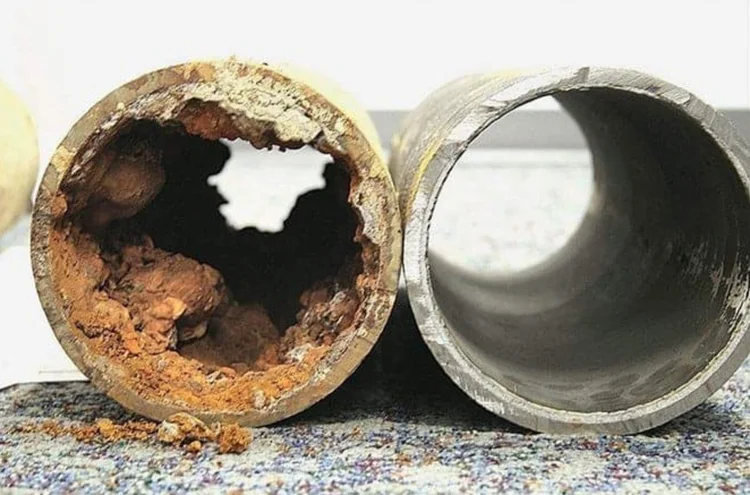
The pattern matters more than any single leak. Rusty or brown water on the first draw, pressure that has fallen off over years, pinhole leaks showing up in more than one location, and green or white corrosion at fittings all point the same direction. If the house is on galvanized steel from the 1960s or earlier, or on polybutylene, the pipe is at end of life regardless.
What kind of copper do you use?
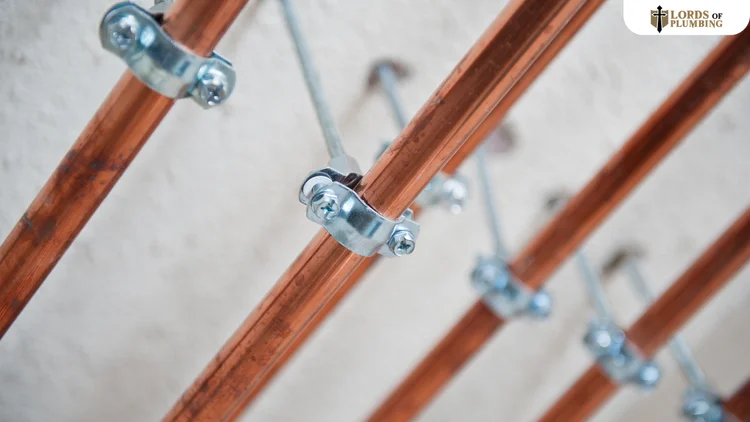
Type L for water distribution. It has a thicker wall than Type M, which matters in a repipe meant to last decades. Joints are soldered with lead-free solder, since federal and California law cap lead in wetted surfaces at 0.25 percent weighted average, or press-fit where open flame near finishes is a risk. Fittings are wrought copper, and lines are insulated where code requires.
Is a permit required for a whole-house repipe?
Yes, without exception. Repiping is permitted work everywhere we operate: LADBS in the City of Los Angeles, County Public Works in unincorporated LA County, and the Santa Cruz County building department. There is a rough inspection with the new pipe held under a pressure test before anything is closed up, then a final. An unpermitted repipe becomes a problem at resale and on insurance claims.
How much of my drywall are you going to open up?
Less than most people expect. We route through attics, crawl spaces, and closets wherever the framing allows, and open targeted access points at fixtures and where lines change direction rather than opening whole walls. We map the route before cutting. Ask up front whether patching, texture, and paint are inside your scope, because that varies by contractor and belongs in the written contract.
Copper or PEX — which should I get?
Both are code-approved in California. Copper is rigid, tolerates high temperature, is unaffected by UV or rodents, and has the longer track record. PEX installs faster with fewer joints, handles freezing better, and costs less. Copper is the usual choice where pipe runs exposed or under a slab, and where you want the fewest fittings buried in a wall. We walk the house before recommending.
How long will we be without water?
Most single-family repipes run two to five days depending on the number of bathrooms, the number of stories, and access. Water is shut off during working hours and restored before we leave each evening in most cases. Drywall patch and paint, if that is in your scope, adds days after the inspection passes. You get the schedule in writing before we start.
I keep getting pinhole leaks in the copper I already have. Why?
Pinholes in copper usually come from water chemistry or velocity rather than age alone. Static pressure above the 80 psi the plumbing code allows, aggressive water, or undersized pipe forcing high flow velocity all erode the wall from the inside. Before repiping we gauge your static pressure and check whether a pressure regulating valve is missing or failed, because new pipe would face the same conditions.
Will a repipe fix my low water pressure?
Often, but confirm the cause first. If galvanized pipe has scaled its interior diameter down to a fraction of original, new pipe restores flow immediately. If the real problem is a failed pressure regulating valve, a partly closed main shutoff, a restricted supply from the meter, or the meter size itself, a repipe will not help. We gauge pressure and flow at several fixtures before quoting.
What does a repipe cost?
No number before a walkthrough. Cost tracks the number of fixtures and bathrooms, the number of stories, slab versus raised foundation, attic and crawl space access, whether the water heater and main line are being changed out, the permit and inspections, and whether drywall repair is included. We walk the house, scope it, and give you a written fixed price before any work begins.
Are you licensed and insured for a job this size?
Yes. California C-36 Plumbing Contractor license 914119, verifiable at cslb.ca.gov, where you can also see the bond and any complaint history. On a project this size, ask every bidder for their license number, confirm the classification actually covers plumbing, and require a written contract listing scope, materials, and payment schedule. CSLB requires home improvement contracts to be in writing.
Do you repipe in Santa Cruz County too?
Yes. We run repipe crews from both the Los Angeles office at 5301 Beethoven St and the Santa Cruz office at 303 Potrero St, so LA County and Santa Cruz County are both covered. Permits go through the local jurisdiction either way. Hours are Los Angeles Los Angeles Monday through Saturday 8:00 AM to 5:00 PM and Sunday 8:00 AM to 4:00 PM, Santa Cruz Monday through Saturday 7:00 AM to 6:00 PM and closed Sunday, Santa Cruz Monday through Saturday 7:00 AM to 6:00 PM and closed Sunday.
Will the new pipes be noisy, or make my water taste different?
New copper can taste faintly metallic for the first few weeks until an oxide layer forms inside, and running the taps clears it. Banging when a valve closes is water hammer, which we address with arrestors at fast-closing appliances like washing machines and dishwashers. Pipe gets strapped at code-required intervals and isolated where it passes through framing so it does not tick as it expands.