
Essential Guide to Sewer Line Repair in Los Angeles
Sewer line issues can be a homeowner’s nightmare. They can cause significant damage if not addressed quickly. In Los Angeles, these problems are common due to aging infrastructure and environmental factors.
Understanding the signs of sewer line trouble is crucial. Slow drains, foul odors, and water backups are red flags. Ignoring these signs can lead to costly repairs.
Traditional sewer line repair methods can be disruptive. They often involve extensive excavation, which can damage your property. Fortunately, trenchless repair offers a less invasive solution.
Choosing the right repair method and company is essential. This guide will help you navigate sewer line repair in Los Angeles. You’ll learn about methods, costs, and selecting a reliable service provider.
Understanding Sewer Line Problems in Los Angeles
Sewer line problems are common in Los Angeles due to its age and environment. Many homes have pipes past their prime. Various factors can contribute to sewer line failures.
Environmental conditions play a major role. Tree roots aggressively seek water, damaging pipes. Ground movement from earthquakes also adds stress on sewer lines.
Knowing the causes of sewer line issues can help prevent them:
- Aging pipes
- Root intrusion
- Ground shifting
- Corrosion
- Clogged lines
Regular inspections help detect these issues early. Advanced technologies, like video inspections, can pinpoint problems without digging.
Los Angeles plumbing professionals are equipped to handle these challenges. They use state-of-the-art tools and methods to identify and resolve issues efficiently.
Understanding these problems can help you make informed decisions. Addressing them promptly protects your property and peace of mind.
Common Signs You Need Sewer Line Repair
Identifying sewer line problems early can save money and hassle. There are several indicators of potential issues that you should watch for.
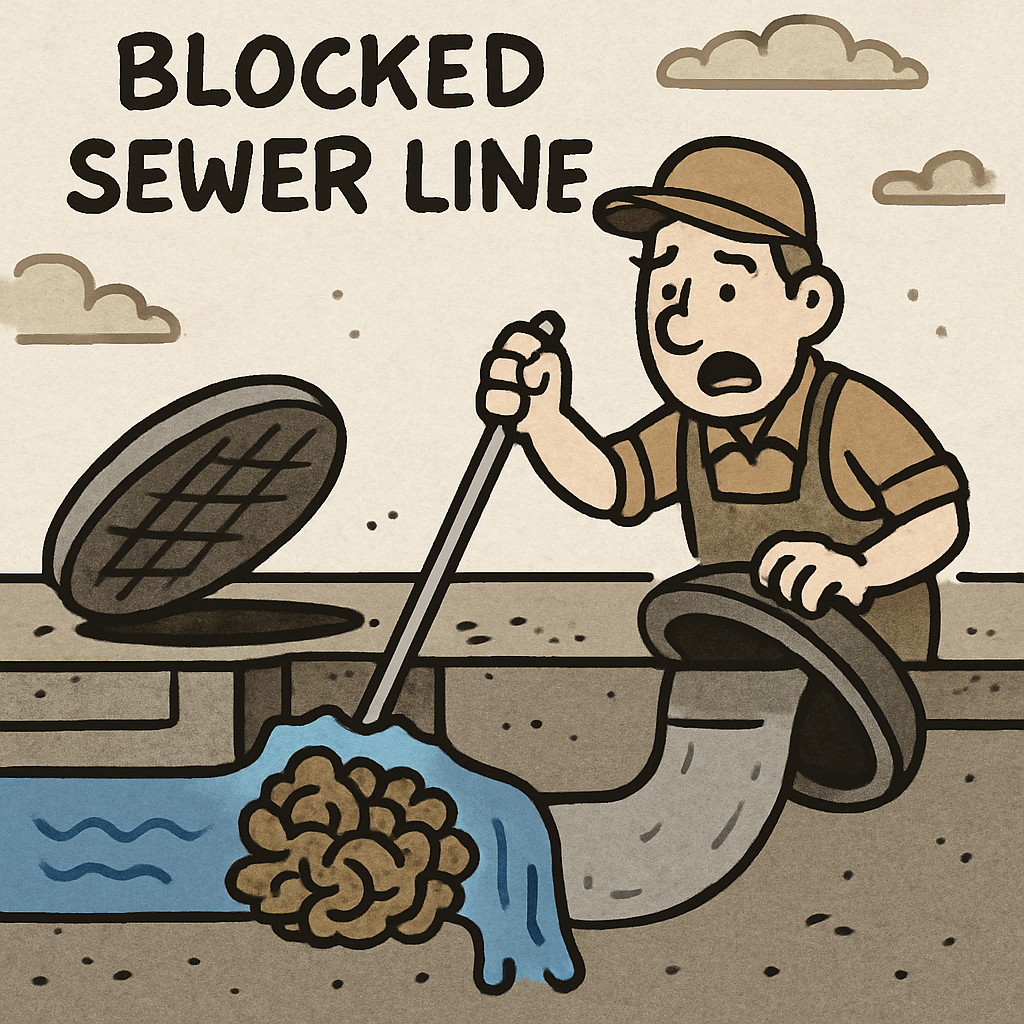
Slow drains are often the first sign of trouble. Multiple slow drains throughout your home could indicate a larger problem. Foul odors wafting through your property could signal a sewer backup as well.
Here are some common signs that suggest you need sewer line repair:
- Slow or backed-up drains
- Unusual gurgling sounds
- Persistent foul odors
- Soggy or flooded yard areas
Ignoring these signs may lead to more severe problems later. Prompt attention to these issues can prevent costly repairs and extensive property damage. Regularly observing your plumbing can safeguard your home against long-term damage.
Sewer Line Repair Methods: Traditional vs. Trenchless
When dealing with sewer line issues in Los Angeles, selecting the appropriate repair method is crucial. Traditional and trenchless approaches are two primary options available today.
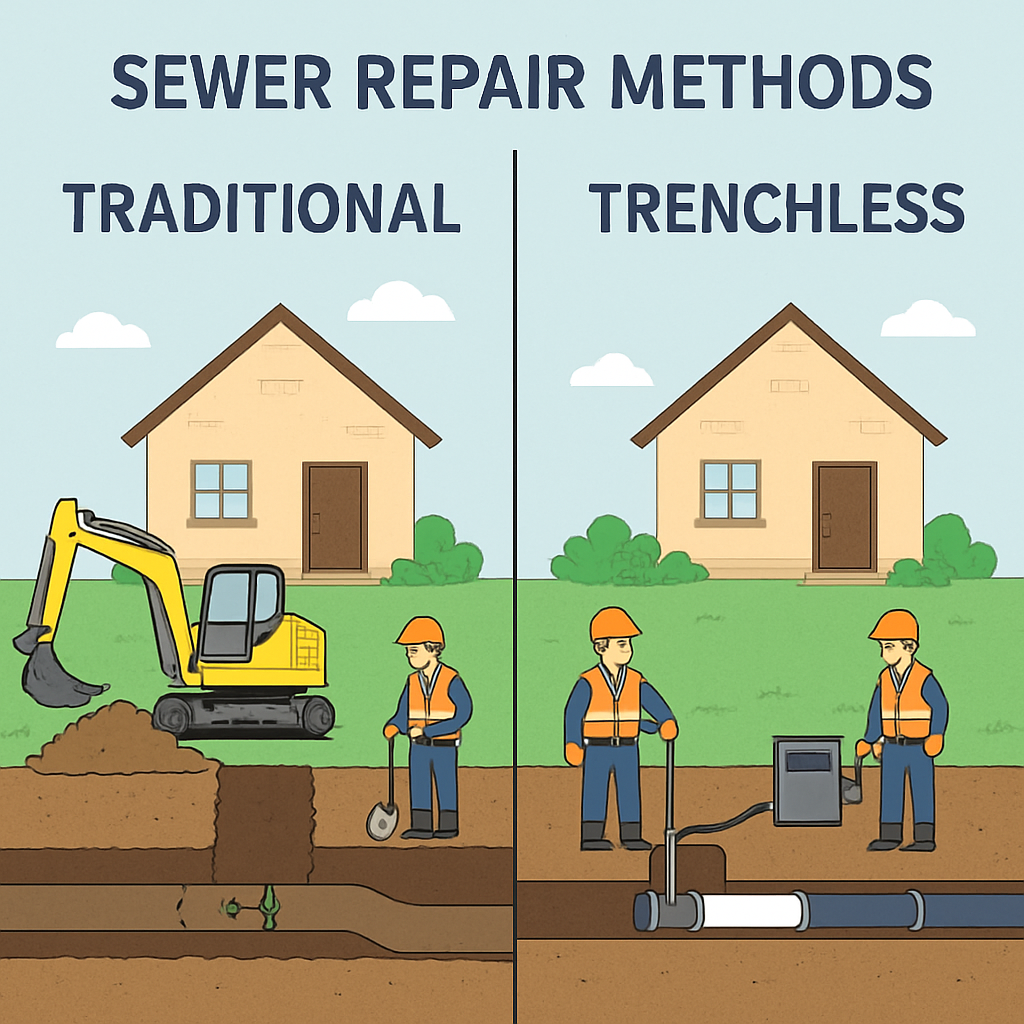
Traditional sewer line repair typically involves excavating a large trench. This method often leads to significant disruption to your yard or driveway. While effective, it can be time-consuming and costly.
Trenchless sewer repair, on the other hand, is much less invasive. This technique avoids the need for extensive digging, preserving your landscape. It’s also usually faster and sometimes more affordable.
Trenchless methods include:
- Pipe bursting: Breaks the old pipe while inserting a new one.
- Pipe lining (CIPP): Uses a resin-coated liner inserted into the existing pipe.
Choosing trenchless sewer line repair can minimize damage and restore functionality quickly. Consider consulting with los angeles plumbing professionals to determine which method is best for your situation. Advanced technology used in trenchless techniques ensures a durable solution.
Trenchless Sewer Line Repair: Benefits and Process
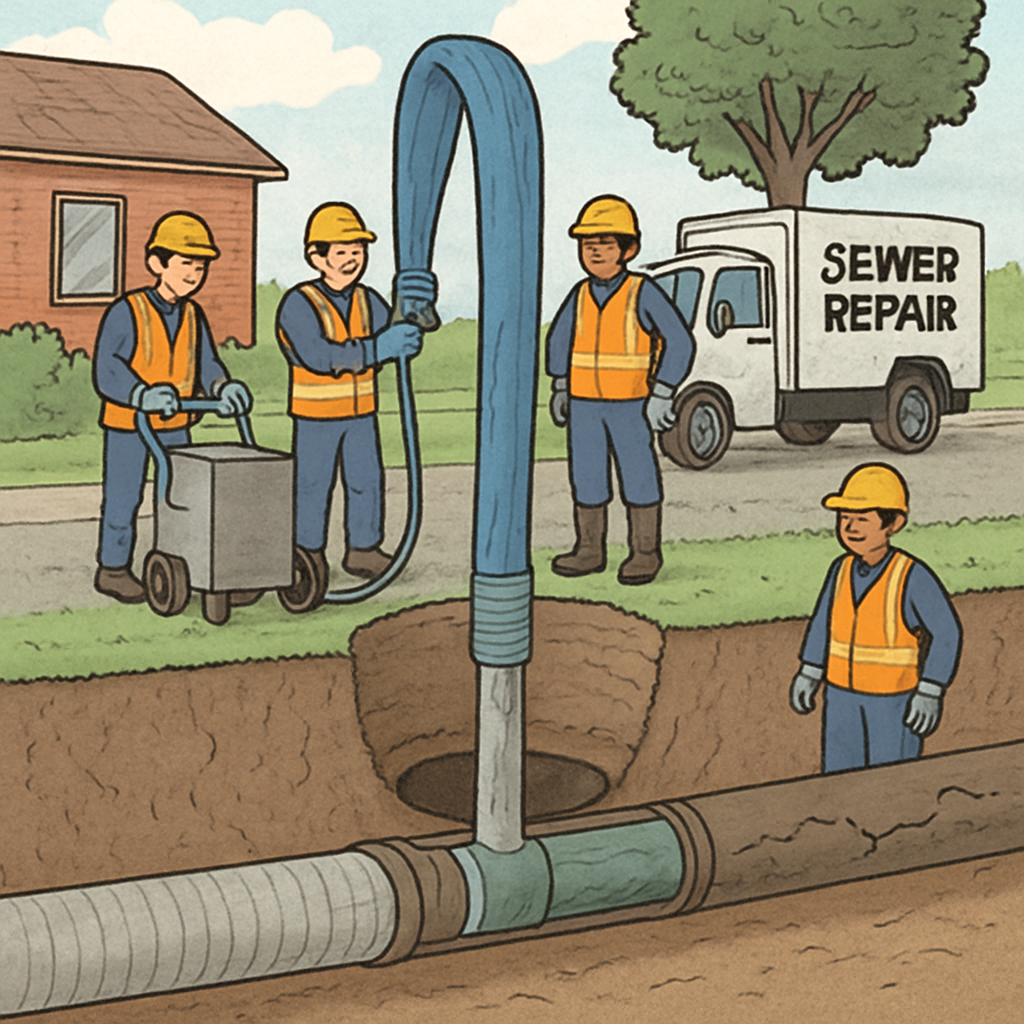
Trenchless sewer line repair offers many significant advantages over traditional methods. It minimizes landscape disruption, preserving your yard, hardscape, and driveways.
This method is often faster, reducing repair time compared to conventional excavation. Additionally, it typically costs less due to fewer labor hours and less equipment needed. These benefits can make trenchless techniques an appealing option for many homeowners.
The process involves a few key steps, including:
- Video inspection: Identify the problem’s source and severity.
- Lining or bursting: Choose either pipe lining or pipe bursting based on the damage extent.
- Restoration: Ensure pipe integrity and restore flow with minimal downtime.
Trenchless methods like these are efficient and yield durable results. For the best outcome, consider hiring experienced professionals in trenchless sewer line repair los angeles. They provide expert insight into choosing the right solution for your plumbing needs.
Sewer Line Repair and Replacement Costs in Los Angeles
Sewer line repair costs in Los Angeles can vary widely. Factors influencing cost include the chosen repair method and the damage’s severity. Trenchless methods might generally appear more affordable due to fewer associated disruptions.
Understanding the typical expenses can help homeowners budget effectively. Here are some average costs to consider:
- Traditional repairs: $4,000 to $6,000
- Trenchless repairs: $3,500 to $5,000
- Pipe replacement: $7,000 to $20,000
Note that each scenario is unique, impacting the final price. Occasionally, additional costs may arise if extra complications, such as tree root intrusion, are present. Consulting several service providers ensures that you get competitive pricing and quality assurances, tailored to your specific needs. Always request detailed estimates to avoid unexpected expenses.
How to Choose the Best Sewer Line Repair Company
Choosing a reliable sewer line repair company is crucial for quality outcomes. Start by checking the company’s credentials and experience. Look for companies with licensed, insured, and experienced technicians.
Customer reviews can offer insights into a company’s reliability. Happy clients often reflect consistent service. Additionally, consider companies that provide free inspections or estimates. Transparency in pricing is a key factor.
Here’s what to look for:
- Extensive experience in sewer repairs
- Proper licensing and insurance
- Positive customer reviews and testimonials
- Transparent pricing and free estimates
- Availability of emergency services
Opting for a company meeting these criteria ensures peace of mind. A capable firm can handle your sewer line issues professionally, minimizing potential headaches.
Emergency Sewer Line Repair Services
Sewer line emergencies demand immediate attention to prevent extensive damage. Many companies in Los Angeles offer 24/7 emergency services to handle these urgent situations. Swift action can save your property from severe water damage.
When considering emergency services, consider companies with a fast response time. These situations cannot wait:
- Sudden water backups
- Severe blockages causing overflow
- Pipe bursts requiring immediate repair
Choosing a reliable service can help you tackle these emergencies efficiently. Prompt repair prevents further complications and preserves the integrity of your plumbing system.
Preventing Future Sewer Line Issues
Preventative measures can significantly decrease the likelihood of sewer line problems. Regular maintenance and awareness of potential issues are key. Homeowners should schedule routine inspections to detect small problems early.
Implement these preventative tips to protect your system:
- Avoid planting trees near sewer lines
- Regularly clean drains to prevent clogs
- Install backflow prevention devices
By taking these steps, you can extend the life of your sewer lines and reduce repair costs.
Conclusion: Protect Your Property with Professional Sewer Line Service
Investing in professional sewer line repair is crucial for maintaining your home’s value and functionality. Skilled technicians provide expert solutions, ensuring your plumbing complies with local codes.
Addressing sewer issues promptly reduces the risk of extensive damage and costly repairs. Trusting professionals with your sewer line needs safeguards your property from future problems. Opt for experienced service providers to give your home the protection it deserves.
Lords of Plumbing serves Culver City and the surrounding Westside
Sewer Line Repair in Los Angeles: Questions Homeowners Ask
If the broken part of my sewer line is out under the street, is that the city’s problem or mine?
In the City of Los Angeles it is yours. Under LAMC 64.12, the property owner maintains the house connection sewer from the property line all the way to the point where it ties into the city main, including the section beneath the parkway and pavement. LA Sanitation maintains the main itself. Work in the public right of way needs a Bureau of Engineering S-Permit.
Do I actually need a permit to replace my sewer line, or can the plumber just get it done?
You need one. LADBS requires a plumbing permit for any modification to a drainage system, which covers a building sewer replacement on your property. If the work crosses the property line into the street, the Bureau of Engineering issues a separate S-Permit, and that portion must be done by a Bonded Sewer Contractor. We pull permits under CSLB #914119, and both are inspected before backfill.
I just found out the previous owner replaced the sewer line without a permit. Am I stuck with that?
Yes. The obligation runs with the property, not the person who did the work. LADBS can issue a permit for existing work, but an inspector generally has to see what is buried, which usually means excavating at the connection points or providing camera footage. We camera the line first so you know what was actually installed before you apply.
What does a sewer camera actually show, and do I get to see the video?
A self-leveling color camera goes in through the cleanout and runs the length of the lateral. The on-screen counter reads distance in feet, so a defect can be pinned to a spot, and a sonde transmitter in the camera head lets us mark the depth and position on the ground above. You see the footage, and you keep a copy.
A plumber snaked the roots out last year and they’re already back. Why does this keep happening?
Cabling shears the roots off but leaves the crack or open joint they came through. The pipe is still leaking moisture into the soil, which is exactly what the roots are following, so they regrow through the same opening within a season or two. Foaming root treatments slow it. The only permanent fix is sealing or replacing the defective section so the water stops escaping.
How do I find out what my sewer pipe is even made of, and does it change anything?
The camera tells us, and the age of the house narrows it down. LA homes built before about 1950 usually have vitrified clay in short sections, which fails at the joints where roots get in. Homes from the 1920s through the 1970s often have cast iron, which corrodes from the inside and loses its bottom channel. Postwar tracts sometimes have Orangeburg, a tar-and-fiber pipe that goes oval.
One company told me trenchless, another said they have to dig up my yard. Which one is right?
Both methods need a continuous path through the old pipe. If the line has fully collapsed, if joints are offset far enough to block the head, or if there is a belly holding standing water, lining is out. A liner follows the existing grade, so it preserves a sag rather than correcting it. That is a dig. The camera footage decides it, not a preference.
Sewage is coming up in my shower right now. What should I do before someone gets here?
Stop all water use, including the washing machine and dishwasher, since every gallon has to go somewhere. Keep people and pets off the wet flooring; raw sewage carries bacteria the LA County Department of Public Health treats as a health hazard. Skip drain chemicals. If sewage is also surfacing in the street or at a manhole, report it to 311 so LA Sanitation checks the main.
We’re in escrow and the buyer’s inspector found a cracked sewer line. What happens now?
It becomes a negotiation, but disclosure is not optional. California Civil Code 1102 requires the Transfer Disclosure Statement to list known material defects, and a camera report is now a known defect. Sellers in the City of Los Angeles also have to deliver a 9A Report of Residential Property Records before close, which shows the permit history on the property.
How long does this take, and can we stay in the house while you work?
A spot repair is often one day. A lined or burst line usually runs one to two days including cleaning and cure time. A full open-trench replacement takes longer, especially under a driveway or with a deep connection at the main. You can stay, but no drains work while the line is open or curing, so plan water use around the crew’s hours.
The tree tearing up my line is the city’s tree in the parkway. Can I make them pay for it?
Generally no. The City’s Urban Forestry Division owns and permits the street tree, but the Bureau of Engineering is explicit that the property owner is responsible for clearing root obstructions in the house connection lateral, including the portion inside the public right of way. You also cannot remove or root-prune that tree without a permit from Urban Forestry.
Why won’t anyone give me a price over the phone?
Because the things that set the number are invisible from the street: the length and depth of the run, the pipe material, whether the failure is one joint or the whole line, what is on top of it, and whether the fix stops at the property line or continues to the main under pavement. We camera the line, then give you a firm written price before any work starts.
My neighbor says I need a backwater valve. How do I know if that applies to my house?
There is an elevation test in the plumbing code. Under CPC 710.1, if the lowest drain on your property sits below the rim of the next upstream manhole on the public sewer, a backwater valve is required. CPC 710.6 adds that it has to sit in a pit with a removable cover so it stays accessible. It needs flushing and inspection once a year.
Will my homeowners insurance cover any of this?
Usually not the pipe itself. Standard policies exclude gradual causes like corrosion, root intrusion, and normal wear, which is what most failed laterals are. Sudden accidental damage inside the house is treated differently, and some carriers sell a separate service line endorsement that covers buried utility lines. Ask for your policy’s exclusions in writing, and send the carrier the camera footage and the dated report.