
Top Electric Tankless Water Heaters Reviewed
In today’s fast-paced world, having a reliable and efficient water heating system is essential. Electric tankless water heaters have become a popular choice for many homeowners looking for an efficient, space-saving solution. In this article, we will delve into some of the top electric tankless water heaters available in 2024, offering insights into their features, performance, and what makes them stand out in the market.
Before diving into specific models, it’s crucial to understand what makes electric tankless water heaters a preferred choice. Unlike traditional water heaters that store hot water in a tank, tankless models heat water on demand. This means you get an endless supply of hot water without the energy waste associated with keeping a full tank hot.
Electric tankless water heaters function by using high-powered electric elements to heat water instantly as it flows through the unit. When a hot water tap is turned on, cold water travels through a pipe into the unit, where it is heated by the elements. This process is efficient and ensures that you have hot water whenever you need it, without having to wait for a tank to fill and heat up.
Installing an electric tankless water heater can be more straightforward than traditional units, but it still requires careful planning. Consider the electrical requirements, as these units often need a dedicated circuit. Regular maintenance is crucial to keep your heater running efficiently. This includes periodic descaling, especially in areas with hard water, to prevent mineral buildup on the heating elements.
Compared to traditional water heaters, tankless units offer several advantages. They eliminate standby losses, which are the energy losses that occur as a tank heater maintains a set temperature. They also take up less space, providing more flexibility for installation. However, the upfront cost is typically higher, but this is often offset by the long-term savings on energy bills.
Electric tankless water heaters offer several benefits that make them a worthwhile investment for many homeowners. Let’s explore these advantages in more detail.
Tankless water heaters only heat water when you need it, leading to lower energy bills. This on-demand heating eliminates the constant energy draw of traditional tank heaters, which must keep a large volume of water hot at all times. Over time, this efficiency can result in significant cost savings, especially in households with high hot water usage.
These units are compact and can be installed in small spaces, freeing up room in your home. Unlike bulky tank heaters, tankless models can be mounted on a wall or tucked into a small corner, making them ideal for homes with limited space. This flexibility allows for more creative use of your living areas, enhancing both functionality and aesthetics.
Electric tankless water heaters tend to last longer than traditional tank heaters, offering a better return on investment over time. Their design is less susceptible to corrosion and leaks, common issues with tank models. Many tankless units come with extended warranties, reflecting their durability and the manufacturer’s confidence in their longevity.
Let’s explore some of the best electric tankless water heaters available in the market this year. Each model brings unique features and advantages that cater to different household needs.
Efficiency
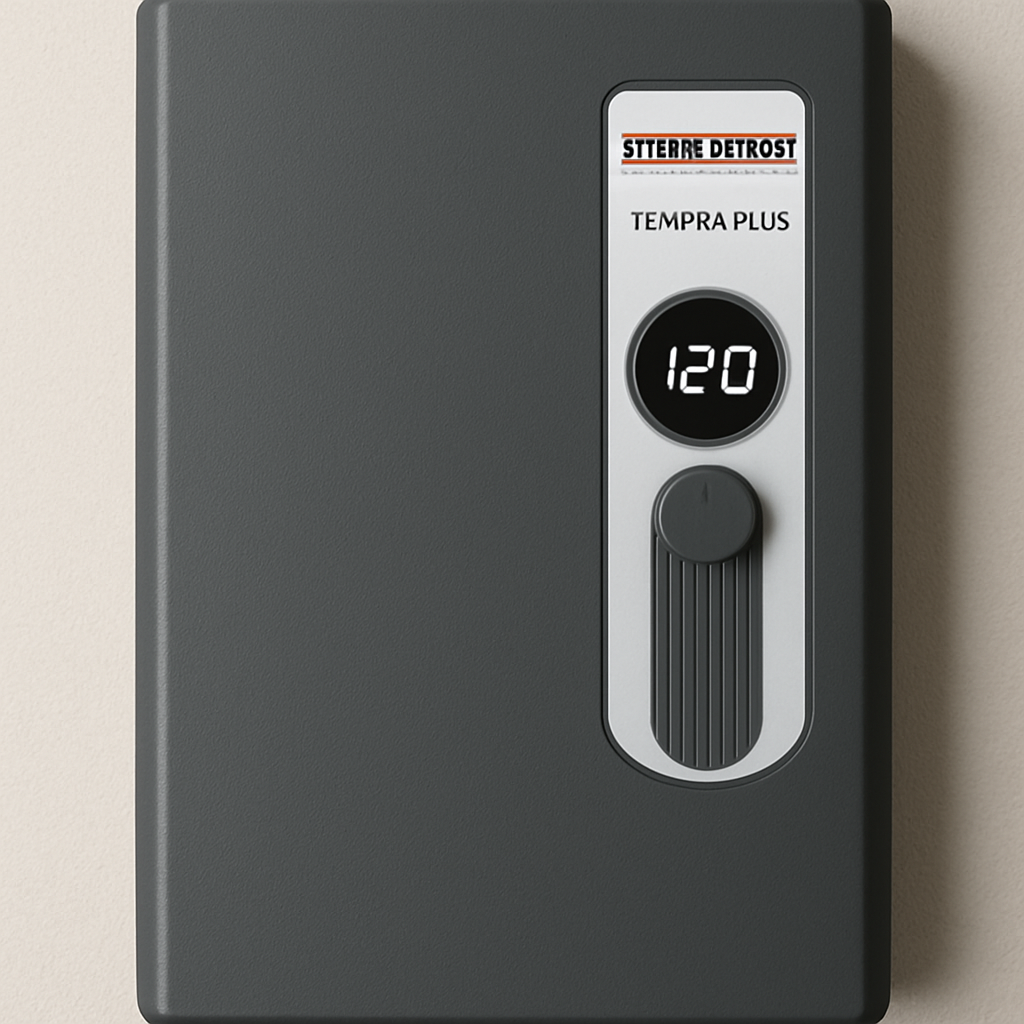
The Tempra Plus boasts an impressive energy efficiency rating, thanks to its self-modulating technology that adjusts power output based on hot water demand. This feature ensures the unit only uses as much energy as needed, optimizing performance and minimizing waste. This can be particularly beneficial in reducing electricity bills over time, making it an economically sound choice.
Features
It offers digital temperature control and a sleek, compact design. The digital interface allows for precise temperature settings, which can be crucial for households with specific temperature needs. The compact design means it fits easily into various spaces, from utility closets to kitchen cabinets, without sacrificing performance.
Performance
Users report a steady flow of hot water even in larger homes, making it ideal for families. The Tempra Plus can handle multiple outlets at once, providing a consistent hot water supply for simultaneous showers, dishwashing, and laundry. This reliability makes it a favorite among users who need dependable hot water access.
2. EcoSmart ECO 27
Overview: The EcoSmart ECO 27 stands out for its affordability and efficiency, making it a great option for budget-conscious buyers.
Efficiency
It provides up to 50% savings on water heating costs, thanks to its self-modulating technology. This feature allows the unit to adjust its energy consumption based on the demand, ensuring that you are not using more electricity than necessary. This efficiency can lead to substantial savings, particularly in regions with high electricity rates.
Features
Includes digital temperature control in 1-degree increments, allowing for precise control over hot water. This level of precision ensures that you can set the perfect temperature for any task, from delicate handwashing to invigorating hot showers. The ECO 27’s intuitive controls make it user-friendly, appealing to both tech-savvy users and those less familiar with digital technology.
Performance
It can provide hot water for multiple showers and sinks simultaneously in warmer climates. The ECO 27 is designed to deliver consistent performance even in demanding situations, ensuring that larger households or those with high hot water needs are well catered for. Its robust performance in warmer climates makes it particularly appealing for users in southern regions.
3. Rheem RTEX-13
Overview: Rheem is a trusted name in water heating, and the RTEX-13 model continues this tradition with reliable performance and easy installation.
Efficiency
The unit offers on-demand hot water with a compact design that fits almost anywhere. Its energy-efficient operation reduces unnecessary power consumption, making it an environmentally friendly option. The RTEX-13’s design ensures that you are not wasting energy heating water you do not need, aligning with green living principles.
Features
Features a digital thermostat control and durable copper immersion heating elements. The digital thermostat provides accurate temperature adjustments, while the copper elements ensure reliable heat transfer and longevity. This combination of features makes the RTEX-13 a durable and efficient choice for many homeowners.
Performance
Ideal for smaller homes or point-of-use applications. The RTEX-13 is perfect for providing hot water to a single bathroom, kitchen, or laundry room, ensuring that smaller spaces are adequately served. Its targeted performance makes it a great choice for apartments, cabins, or as a supplemental heater in larger homes.
4. Bosch Tronic 3000
Overview: Bosch Tronic 3000 is perfect for those looking for a mini-tankless water heater for point-of-use applications.
Efficiency
Although smaller, it offers instant hot water with an easy installation process. Its compact size and efficient operation make it an ideal choice for areas where space is at a premium. The Bosch Tronic 3000’s design ensures that you are getting maximum efficiency without compromising on performance.
Features
Compact design with a straightforward temperature control system. This simplicity in design makes it accessible for users who prefer a more straightforward approach to technology. Its unobtrusive size allows it to fit seamlessly into tight spaces, providing hot water where you need it most.
Performance
Best suited for small spaces such as under sinks or in bathrooms. The Tronic 3000 excels in delivering reliable hot water for handwashing, dishwashing, or other localized needs. Its focused performance ensures that even small applications are met with efficiency and reliability.
Choosing the Right Electric Tankless Water Heater
When selecting the best electric tankless water heater for your home, consider several important factors. This decision will impact your comfort, energy bills, and overall satisfaction with your water heating system.
Size and Capacity
Ensure the unit you choose can handle the hot water demand of your household. Larger families may require models with higher flow rates. Consider your peak usage times and calculate the flow rate needed to meet those demands. This will ensure that you select a model capable of providing consistent hot water without interruptions.
Energy Efficiency
Look for units with high energy efficiency ratings. This will not only save you money on utility bills but also reduce your environmental impact. Units with high efficiency ratings are often marked by certifications such as ENERGY STAR, which indicate superior energy performance. These models can offer long-term savings that justify their initial cost.
Installation Requirements
Consider where the unit will be installed and ensure it fits the space. Some models may require specific electrical setups, so consult with a professional if necessary. Proper installation is crucial for optimal performance and safety. This may include upgrading your electrical panel or ensuring proper ventilation, depending on the model’s requirements.
Budget
While tankless water heaters can be more expensive upfront, they offer savings in the long run. Balance initial cost with long-term efficiency and reliability. Consider the total cost of ownership, which includes installation, maintenance, and operational costs, to make an informed decision that aligns with your financial goals.
Final Thoughts
Electric tankless water heaters are an excellent investment for those seeking efficiency, convenience, and reliability. By understanding your household’s hot water needs and comparing the features of top models, you can find the perfect unit that meets your requirements. Whether you choose the advanced technology of the Stiebel Eltron Tempra Plus, the budget-friendly EcoSmart ECO 27, the reliable Rheem RTEX-13, or the compact Bosch Tronic 3000, rest assured you’ll enjoy endless hot water on demand.
Invest in a top-rated electric tankless water heater today and experience the benefits of modern water heating technology. Embrace the comfort and efficiency of a system designed to meet your family’s needs, ensuring that you never run out of hot water again.
Electric Tankless Water Heaters: Questions Before You Buy
Can my house actually run a whole-house electric tankless water heater?
Often not without electrical work first. A whole-house electric unit typically draws 100 to 150 amps at 240 volts across two to four double-pole breakers rated 40 to 60 amps each. Many older Los Angeles homes still have 100-amp or 125-amp service, which leaves nothing for the heater once the range, dryer and air conditioning are counted. We check the panel and the existing load before recommending anything.
How many breakers does one of these need? The listing just says 240 volts.
It depends on the kilowatt rating. A Stiebel Eltron Tempra 24 needs two 50-amp double-pole breakers and draws 100 amps. An EcoSmart ECO 27 draws 112.5 amps at 240 volts and needs three 40-amp double-pole circuits with 8 AWG copper. Each circuit is a separate home run to the panel, so you need the breaker spaces as well as the capacity.
My panel is 100 amps. What would it take to make this work?
A service upgrade, usually to 200 amps, plus coordination with your utility because the meter and service drop change. An electrician runs a load calculation under Article 220 of the California Electrical Code, Title 24 Part 3, to size it. That work needs its own electrical permit and inspection. In many older homes the upgrade is the larger part of the project.
My house already has gas. Should I still look at electric tankless?
Usually no. If you have a gas line and a usable vent path, a gas tankless unit will deliver more hot water and will not touch your electrical service. A gas condensing tankless can produce 8 to 11 gallons per minute where a large electric unit manages 4 to 5. Electric becomes the better answer when gas supply or venting is the real obstacle.
Is there any situation where electric tankless is the right call?
Yes, several. A point-of-use unit under a remote sink cuts the long wait for hot water to reach the fixture, and a small one like the Bosch Tronic 3000 US3 runs on a single 120-volt circuit. Condos with no gas service and no path for a flue often have no alternative. ADUs are the same. You are sizing for one or two fixtures, not the whole house.
Do electric tankless heaters need a vent like my gas heater does?
No. There is no combustion, so there is no flue, no combustion air requirement and no vent termination clearance to work around. That is the strongest practical argument for electric. It matters in interior closets, condo units and remodels where running a Category III or IV vent to the outside would mean opening walls or the roof. You still need accessible service valves and a shutoff.
Would the same unit perform the same at my LA house and my place near Santa Cruz?
No, and the difference is significant. Output depends on temperature rise. Incoming water in coastal Santa Cruz County runs colder than in Los Angeles, often by ten degrees or more. Run the numbers: a 27 kW unit delivers roughly 4.6 gallons per minute at a 40-degree rise and about 3.7 at a 50-degree rise. With California showerheads limited to 1.8 gpm, that is close to a full fixture of capacity lost.
Do I need a permit for this, or can the plumber just swap it in?
You need permits. Water heater replacement is permitted work in Los Angeles through LADBS, and through the County or city building department in Santa Cruz. New 240-volt circuits or a panel change require a separate electrical permit and inspection under the California Electrical Code. The heater itself must also be certified in the California Energy Commission appliance database under the Title 20 efficiency regulations.
Can you handle the electrical side too, or do I need a second contractor?
We hold a C-36 plumbing license, CSLB #914119. Panel upgrades and new service equipment fall under the C-10 electrical classification, so that portion goes to a licensed electrician working on a separate electrical permit. We handle the heater, the water connections and the plumbing inspection, and we coordinate the sequence. You can verify any California license at cslb.ca.gov before work starts.
Do electric tankless units get scaled up the way gas ones do?
Yes, and arguably worse, because scale forms directly on the heating elements rather than inside a heat exchanger. Much of Los Angeles County runs hard water, and hard water leaves calcium carbonate behind every time it is heated. Flushing with a food-grade descaling solution roughly once a year keeps output steady. Installing isolation valves at the time of install makes that service straightforward.
What drives the cost of an electric tankless installation?
Mostly the electrical work, not the heater. The drivers are available panel capacity, whether a service upgrade and utility coordination are needed, the distance from the panel to the unit, the wire gauge and number of circuits, permit fees in your jurisdiction, and whether the water lines have to be relocated. We look at the panel and the install location, then give you a firm price before anything starts.
Will switching to electric tankless lower my utility bill?
Not necessarily. The unit converts nearly all the electricity it draws into hot water and has no standby loss, which is real. But in California electricity costs considerably more per unit of heat than natural gas, so a household moving from a gas tank to electric tankless often sees the gas bill drop and the electric bill rise by more. Check your actual rate schedule with LADWP, SCE or PG&E first.