
Running all night, leaking at the base, rocking when you sit down, or barely flushing. We find the part that failed, give you a firm price, and fix it. If the toilet isn’t worth saving, we’ll say so.
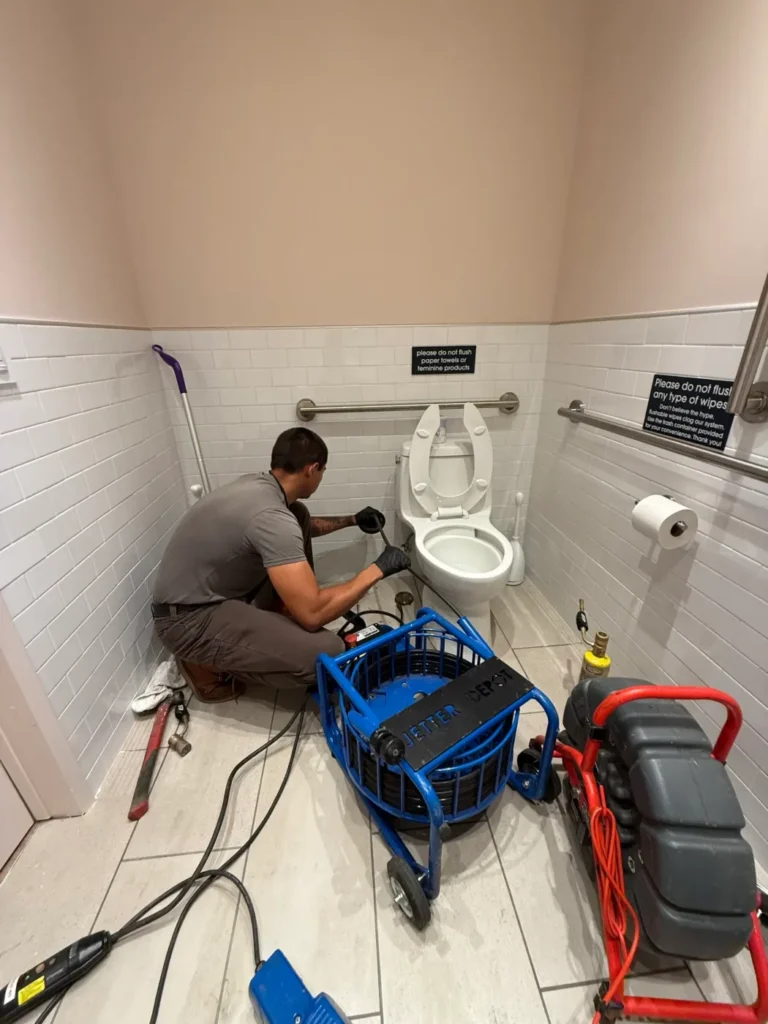
A toilet is a simple machine. When it misbehaves, the cause is nearly always one of these parts. Knowing which one tells you whether you’re looking at a small repair or a replacement.
The tank refills every few minutes, or you hear water trickling all night. That’s the flapper or the fill valve, and it’s the most common toilet call we get.
Usually a repairThe wax seal under the toilet has failed. Water is getting into the subfloor every time you flush, which is why this one shouldn’t wait.
Repair soonLoose closet bolts or a cracked flange. A rocking toilet breaks its own seal, so a rock today becomes a leak later.
Usually a repairScale in the rim jets, a low water level in the tank, or a partial clog in the trapway. Older low-flow designs from the 1990s are also known for this.
Repair or replaceSomething lodged in the trapway, or a problem further down the line. If other drains gurgle too, it’s the main line, not the toilet. See drain cleaning in Santa Cruz.
Depends on the causeCondensation. Cold tank water meets humid coastal air. It isn’t a leak, but it can still stain and soften the floor over time.
Simple fixMost toilets we see are worth repairing. These are the cases where we’ll recommend a new one instead.
| What we find | What we recommend |
|---|---|
| Worn flapper, fill valve or handle | Repair. These are standard parts and the toilet will work like new. |
| Leak at the base, porcelain sound | Repair. Pull the toilet, check the flange, reset it on a new seal and new bolts. |
| Cracked tank or bowl | Replace. A crack in porcelain can’t be repaired reliably and tends to fail without warning. |
| Old toilet using 3.5 gallons or more | Replace. It wastes water every flush, and it may have to go anyway if you sell. |
| 1990s 1.6-gallon model that clogs constantly | Usually replace. Many early low-flow designs simply don’t flush well. |
Every new toilet sold in California since 2014 uses 1.28 gallons per flush or less. A good modern one clears the bowl better than the 1990s models ever did, on less water.
The City of Santa Cruz’s toilet rebate (up to $200 for toilets using 1.0 gallon per flush or less) is under review and not taking applications as of October 2026. If it reopens, we’ll tell you when we quote.
A toilet that leaks into the bowl can waste a lot of water without making much noise. It’s one of the most common reasons for a bill that jumps for no obvious reason.
Put a few drops of food coloring in the tank and don’t flush for 15 minutes. If the color shows up in the bowl, the flapper is leaking. If the water level in the tank is above the top of the overflow tube, the fill valve isn’t shutting off.
Soquel Creek sends a leak alert when your meter shows steady use: 3 gallons an hour for 24 hours, or 75 gallons an hour for 8 hours. A toilet that leaks on and off may never set one off. If a leak raised your bill, the district has a leak adjustment form; keep our invoice to go with it.
Old toilets come up at sale time more often than people expect. Here’s how the rules stack up.
Under Civil Code §1101.4, single-family homes built before 1994 had to replace toilets that use more than 1.6 gallons per flush. Sellers must disclose any that are still in the house.
Toilets over 1.6 gallons per flush must be replaced with 1.28-gallon models before the sale. A plumber, contractor or agent signs the County’s Water Conservation Certification. If the buyer agrees in writing to take it on, they have 90 days after closing.
The cities of Santa Cruz and Capitola have their own rules, and Soquel Creek Water District ended its separate retrofit program in 2018. We confirm which applies to your address, replace what’s needed, and sign the certification. Selling also means a sewer lateral inspection in most of the county.
Vacation rentals are hard on toilets. Guests flush wipes and anything else that fits, and a toilet can run for days between turnovers before anyone notices. For rental owners we recommend a toilet with a wide trapway, a quality fill valve, and a shutoff valve that turns freely, so the next guest’s problem is a quick fix instead of a flooded bathroom. We can handle several units in one visit.
Almost always the flapper or the fill valve. A worn flapper lets water seep from the tank into the bowl, so the tank refills on its own every few minutes. A failing fill valve hisses or keeps running because it never shuts off. Both are standard repairs. The quick test: put a few drops of food coloring in the tank and don’t flush for 15 minutes. If color shows up in the bowl, the flapper is leaking.
Not the kind that needs a midnight call, but don’t let it go. Water leaking at the base usually means the wax ring has failed, and every flush pushes a little water under the toilet and into the subfloor. Stop using that toilet if you can, keep the floor dry, and call us. We pull the toilet, check the flange, and reset it on a new seal.
Repair it if the porcelain is sound and the problem is a part: flapper, fill valve, wax ring, bolts. Replace it if the tank or bowl is cracked, if it’s an old 3.5-gallon toilet, or if it’s an early-1990s 1.6-gallon model that clogs constantly. We’ll tell you which before any work starts.
Possibly. California Civil Code §1101.4 required single-family homes built before 1994 to replace toilets that use more than 1.6 gallons per flush, and sellers must disclose any that remain. In unincorporated Santa Cruz County, those toilets have to be replaced with 1.28-gallon models before the sale, and a plumber, contractor or agent signs a Water Conservation Certification. The cities of Santa Cruz and Capitola have their own rules, so we confirm which applies to your address.
Not from the City of Santa Cruz at the moment. Its toilet rebate, which paid up to $200 for toilets using 1.0 gallon per flush or less, is listed as under review and not accepting applications as of October 2026. We’ll tell you when we quote if a rebate has reopened.
If only the toilet backs up, the clog is usually in the toilet or right below it. If the tub or shower gurgles when you flush, or several drains are slow at once, the blockage is further down in the main line. That calls for drain cleaning or a camera look at the sewer line, not another plunge.
That’s condensation, not a leak. Cold water in the tank meets warm, humid air, which happens a lot near the coast. It can still damage the floor over time. The fixes are an insulated tank liner, a toilet with a lined tank, or a mixing valve that takes the chill off the fill water.
Yes. Tell us how many toilets and units when you call, so we can schedule enough time. For vacation rentals we can also recommend models that hold up to heavy use.
Call our Santa Cruz shop. We’ll tell you what’s wrong and what it costs before we pick up a tool.