
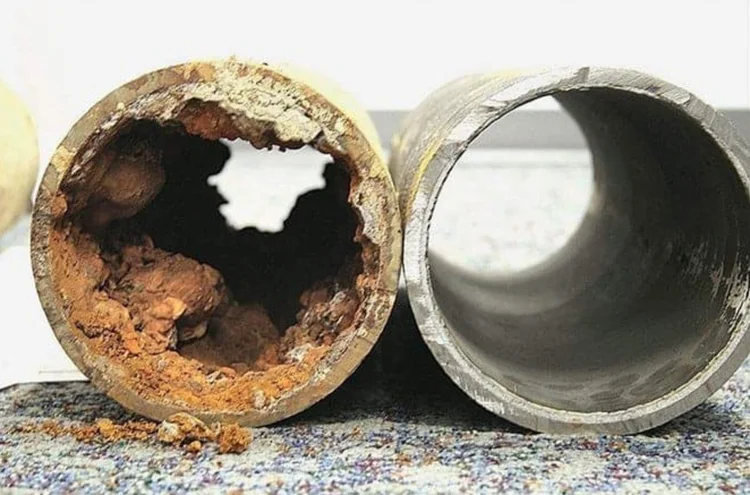
Rumbling is usually sediment on the tank bottom boiling under the burner or element. On a younger tank it is a maintenance issue and often clears with a full flush through the drain valve. On a tank past ten or twelve years the same noise generally means scale has been cooking the steel for years, and replacement is the better call.
Age and the failed part decide it. A thermostat, heating element, thermocouple, gas control valve, or temperature and pressure relief valve are all replaceable, and on a tank under about eight years old that repair is normally worth doing. Rusty hot water or seepage from the tank seam means the steel shell has gone, and no part fixes that.
Yes. California Health and Safety Code section 19211 requires all new, replacement, and existing residential water heaters to be braced, anchored, or strapped to resist falling or horizontal displacement in an earthquake, with the minimum standard set by the California Plumbing Code. The seller of a property also has to certify compliance in writing to the buyer.
Tankless capacity is quoted as gallons per minute at a stated temperature rise, and the incoming supply on the Santa Cruz coast runs colder than inland Southern California. A colder inlet means a larger rise to reach the same tap temperature, and the same unit delivers fewer gallons per minute doing it. Sizing has to use local inlet temperature, not the brochure figure.
They suit mild coastal conditions, since they pull heat from surrounding air and lose efficiency once intake air drops near 40 degrees. Manufacturers typically specify a minimum free air volume around the unit, commonly 450 or 700 cubic feet, so a sealed closet usually will not work. They also produce condensate, which needs a gravity drain that never rises above the discharge port.
Trace the source before assuming the tank is finished. Common causes are the temperature and pressure relief valve discharging, a loose drain valve, condensation on a gas unit during heavy draw, or a fitting at the cold or hot connection. Water rising from the base of the tank itself is corrosion of the shell, and that is not repairable.
It is a sacrificial magnesium or aluminum rod threaded into the top of the tank that corrodes in place of the steel lining. Once it is consumed, the tank itself starts rusting. Inspecting and replacing it is the single maintenance item that most extends tank life, and it is easy to check while the heater is being flushed.
You do if the house is on a closed system, which happens when a check valve, pressure regulator, or backflow preventer sits on the water service. Heated water expands with nowhere to go, pressure climbs, and the temperature and pressure relief valve starts weeping. A correctly sized and pre-charged expansion tank absorbs that. Static pressure gets checked at the same time.
It depends on the part that failed, the fuel type, the tank size, and whether the installation needs work beyond swapping the unit, such as venting corrections, seismic strapping, an expansion tank, a drain pan, or a gas or electrical change to meet current code. Permit requirements factor in. You get a firm price after we look at it, before work begins.
Yes. Our Santa Cruz office at 303 Potrero St, Bldg 42 #104 serves the county, including Scotts Valley, Felton, Ben Lomond, Boulder Creek, Capitola, Soquel, and Aptos. Older San Lorenzo Valley homes often have undersized gas lines or venting that predates current code, and that gets checked before any replacement. Call (831) 777-5758.